Turning a Classic into Something Kids Can Enjoy
The idea came to Philip Graham during a routine visit to the library.
He was searching for classic stories adapted for young readers, something welcoming and easy to understand, long before kids are ready for the originals. When the librarian paused and said she couldn’t think of any, Philip had a realization.
“That was the moment,” he says. “I thought, maybe I could try making one myself.”
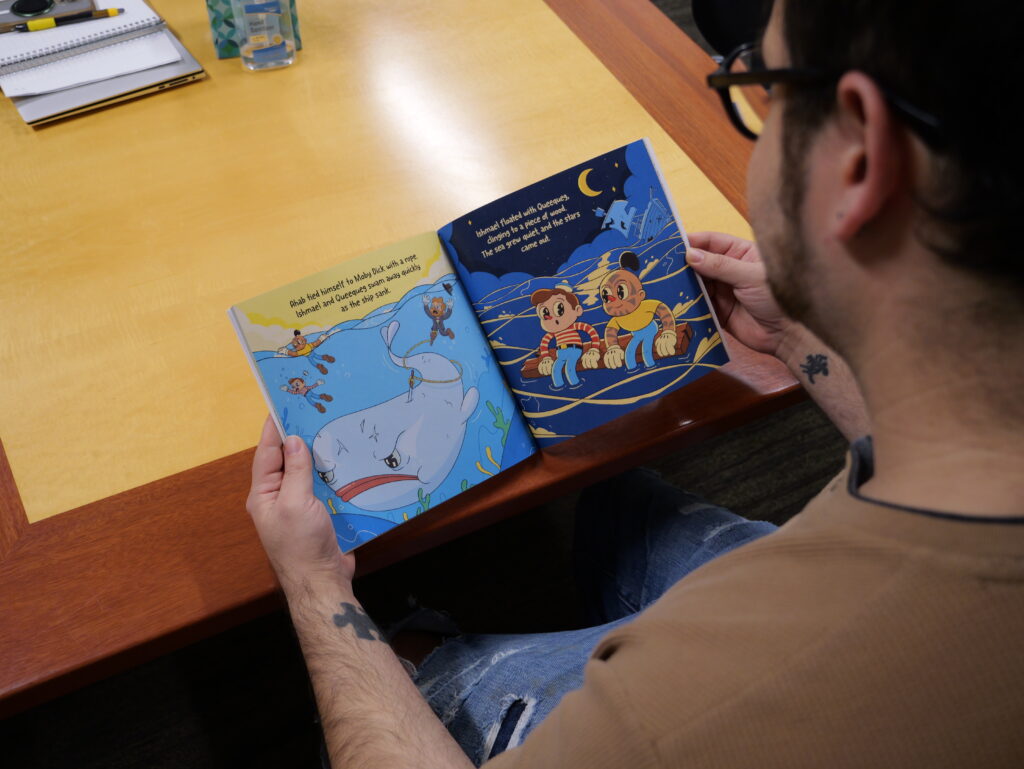
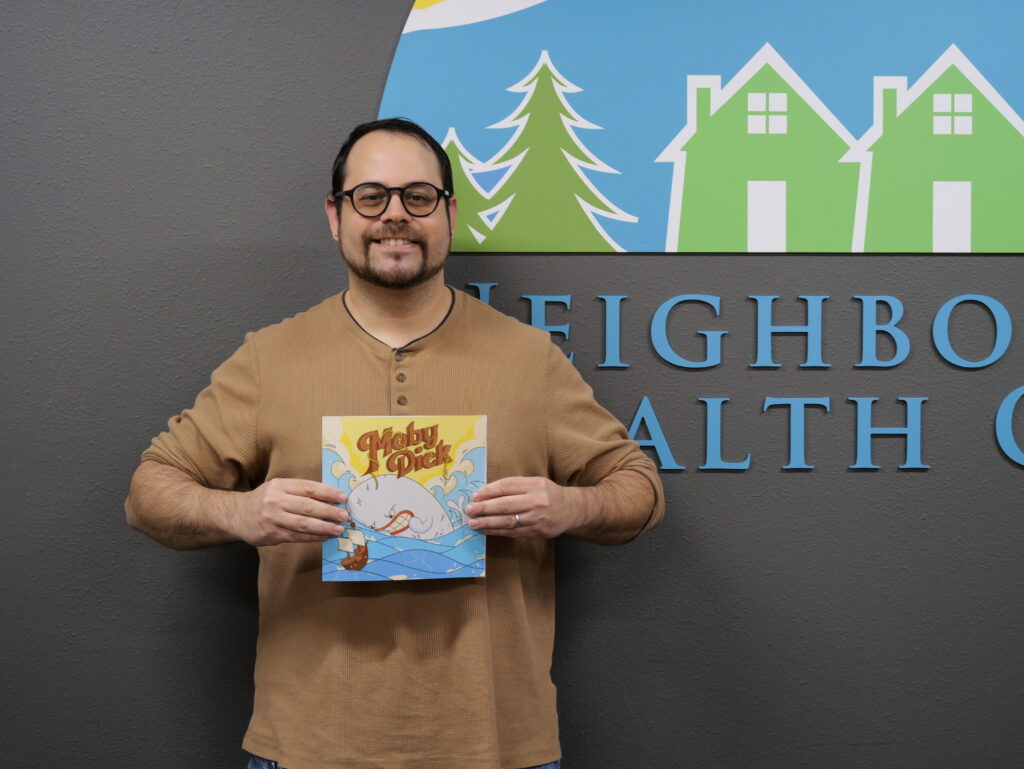
That spark led Philip, an IT Coordinator at Neighborhood Health Center (NHC), to take on a creative challenge outside his day-to-day work: rewriting Moby-Dick into a short, child-friendly story for early readers. It became his first completed children’s book and a personal milestone years in the making.
Making the Complicated Feel Possible
Philip has loved Moby-Dick since childhood. But he also understands why the original novel can feel overwhelming.
As he worked on his adaptation, he focused on preserving the heart of the story (adventure, curiosity, and discovery) while presenting it in language young readers could follow.
“I wanted it to still feel like the same story,” he explains. “Just in a way that doesn’t feel intimidating.”
That process (distilling something complex into something approachable) felt familiar. It mirrors the work Philip does every day at NHC, where he helps staff navigate technology, solve problems, and understand systems that can otherwise feel overwhelming.
“At NHC, we’re always meeting people where they are,” he says. “Whether it’s tech or storytelling, you have to think about how someone else experiences it.”
Related: Get a breakdown on complex health topics
A Project Rooted in Learning and Collaboration
Creating the book pushed Philip into new territory. He collaborated with a local animation studio, learned about illustration workflows, and used his technical skills to manage the digital side of the project.
“It gave me a whole new respect for creative work,” he says. “There’s so much thought behind every detail.”
For Philip, finishing the project mattered just as much as starting it.
“I’m someone who gets excited about ideas,” he admits. “Actually completing something like this felt huge.”
Reflecting the Heart of NHC
While the book was a personal passion project, the values behind it reflect what we see across NHC every day: curiosity, empathy, patience, and a desire to make things clearer and more accessible for others.
Philip hopes the experience encourages kids to feel less intimidated by big ideas, and reminds adults that complex things don’t have to stay complicated.
At Neighborhood Health Center, we’re proud to celebrate staff achievements like this—not because of what was created, but because of what it represents: creativity, care, and a commitment to helping others understand the world a little more easily.