How to Stay Safe and Cool This Summer
Summer can be a great time to get outside and enjoy the warm weather. But heat can also be dangerous, especially for young children, older adults, pregnant women, and those living with chronic health conditions. The good news is that heat-related illness is almost always preventable when you know the signs and take simple steps to protect yourself.

How heat affects the body
When it’s hot outside, your body works hard to cool itself down (mainly by sweating). But on very hot or humid days, sweating may not be enough. Your body temperature can rise faster than it can cool down, which puts stress on your heart, kidneys, and other organs.
Over time, even a few hours in the heat without enough water or shade can lead to heat-related illness. This is not a sign of weakness. It’s simply how our bodies respond to extreme temperatures.
Who is most at risk?
While anyone can be affected by heat, some people need to take extra care.
- Children are more likely to get dehydrated quickly because they lose fluids faster than adults. They also may not know when to stop playing and cool down. Never leave a child in a parked car because temperatures can rise to dangerous levels in minutes. Keep kids out of direct sun during the hottest part of the day, dress them in lightweight and loose clothing, and make sure they drink water before, during, and after time in the heat.
- Pregnant women face added risk because heat puts extra stress on the heart and cardiovascular system, which is already working harder during pregnancy. Even one very hot day can increase the risk of preterm birth, low birth weight, or other complications. Pregnant women should wear light, loose clothing, drink six to eight glasses of water a day, limit time outside during peak heat hours, and call their provider if they feel dizzy, short of breath, or lightheaded.
- Older adults do not adjust to sudden temperature changes as easily as younger people. They are also more likely to have health conditions or take medications that affect the body's ability to handle heat. Older adults living alone are especially at risk. Check on them often during hot weather.
- People with chronic conditions such as heart disease, diabetes, asthma, kidney disease, or high blood pressure are more vulnerable to heat-related illness. Heat can make these conditions harder to manage and may worsen symptoms. Ask your provider if any of your medications make you more sensitive to heat.
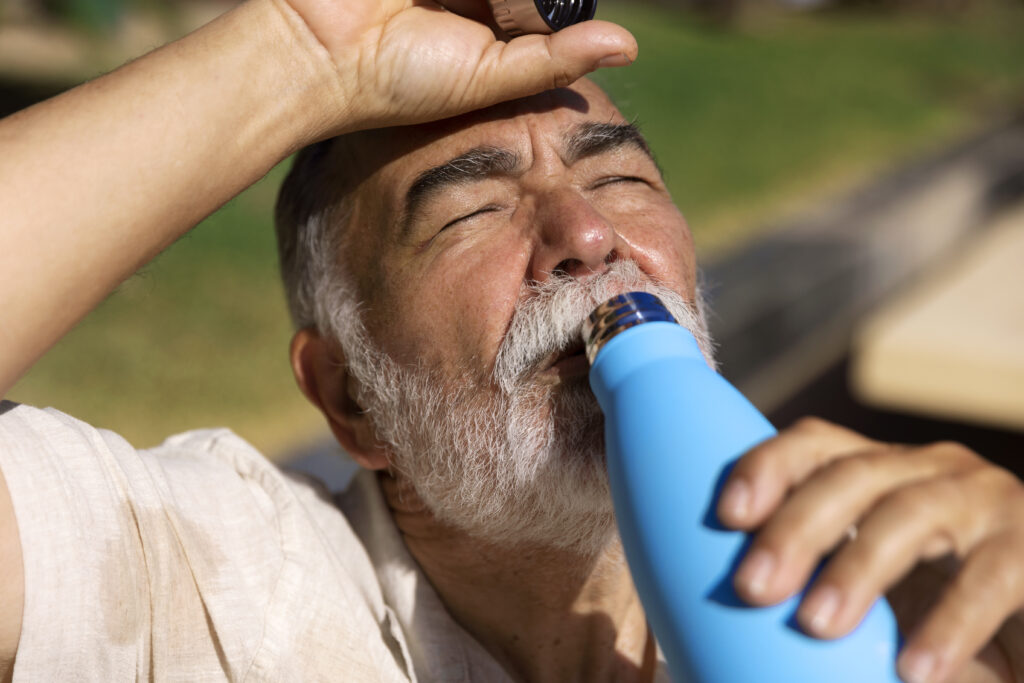
Heat exhaustion vs. heat stroke: know the difference
Heat-related illness ranges from mild to life-threatening. Knowing the difference between heat exhaustion and heat stroke can save a life.
Heat exhaustion
- Body temp between 101°F and 104°F
- Pale, moist skin with heavy sweating
- Muscle cramps
- Headache, dizziness, weakness
- Nausea or vomiting
Heat stroke — call 911
- Body temp above 104°F
- Dry, red skin and stops sweating
- Confusion or slurred speech
- Hallucinations or strange behavior
- Seizures or fainting
- Strong, rapid pulse
Heat stroke is a medical emergency. If you see signs of heat stroke, call 911 right away. Move the person to a cool place and use cool water, cloths, or a fan to lower their body temperature while you wait for help.
If you or someone with you shows signs of heat exhaustion, get out of the heat right away. Drink water, rest in a cool spot, and apply cool cloths to the neck, armpits, and groin. If symptoms don’t improve quickly or get worse, seek medical care.
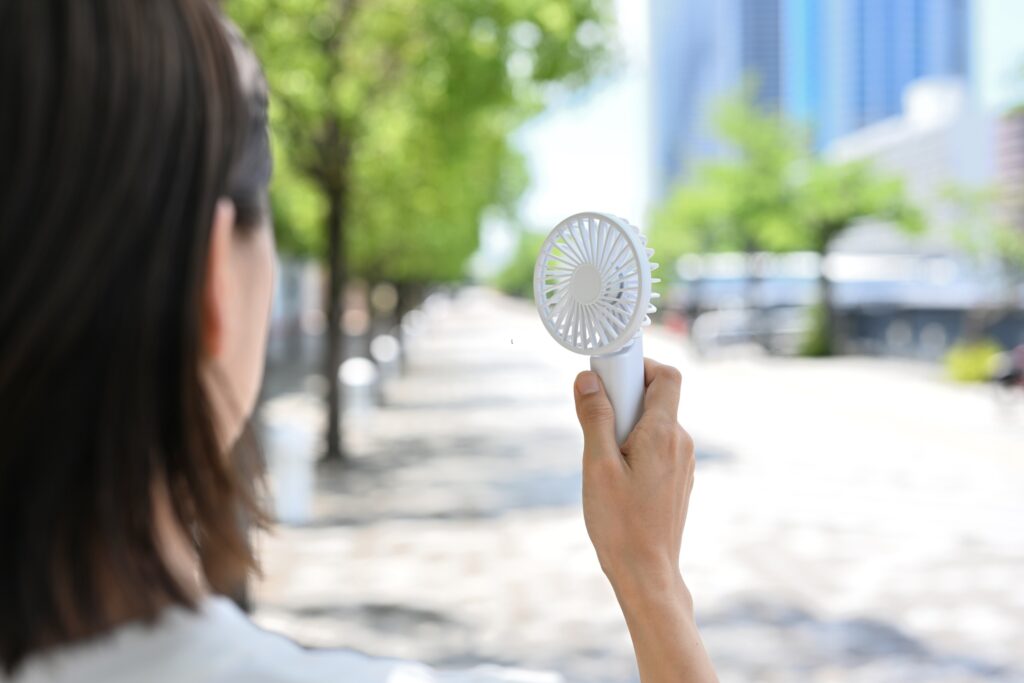
Simple ways to stay cool
You don’t need air conditioning to stay safe in the heat. There are many low-cost ways to keep your home and body cool.
- Block the heat before it gets in. Close blinds and curtains on south- and west-facing windows during the day to keep sunlight out. Open windows in the evening when outdoor temperatures drop below indoor temperatures.
- Use fans wisely. Place a bowl of ice in front of a fan for a DIY cooler. In the evening, put a box fan in a window facing outward to push hot air out, and open a window on the other side of your home to pull in cool air.
- Cool your body directly. Take cool showers or baths. Apply a damp cloth to your wrists, neck, or behind your knees. Keep a spray bottle in the fridge for a quick cool-down mist.
- Drink water, even when you don’t feel thirsty. Try to drink at least one cup of water per hour in hot weather. Avoid alcohol and caffeine, which can make dehydration worse.
- Skip the oven. Use the microwave, air fryer, or toaster oven instead of your stove or oven. These appliances create less heat. If you do cook, do it in the early morning or after sunset.
- Run appliances at night. Dishwashers and dryers give off a lot of heat. Run them after dark to keep your home cooler during the day.
- Stay out of the sun during peak hours. The hottest part of the day is usually between 11 a.m. and 3 p.m. If you go outside, wear loose and light-colored clothing, a wide-brimmed hat, and sunscreen.
- Find a cool space. Libraries, malls, community centers, and cooling centers are great places to spend a few hours on hot days. Even a couple of hours in a cool space can lower your risk of heat illness.
Free and low-cost cooling resources in our area
If you are struggling with energy costs or need a cool place to go, there are resources available to help.
Cooling Centers
During heat events, local governments open free cooling centers. Call 2-1-1 or visit 211info.org to find the nearest location. You can also check by county:
OHP Air Conditioner Program
Oregon Health Plans (OHP) members may be able to get a free air conditioner or air filter through their CCO’s flexible services program. Contact your CCO or call OHP Client Services at 1-800-273-0557 to ask about eligibility. More info at oregon.gov/oha.
Help with Energy Bills
Several programs can help lower your utility costs. LIHEAP (Low Income Home Energy Assistance Program) and the Oregon Energy Assistance Program (OEAP) provide assistance with bill payments to income-eligible households. Visit oregon.gov/ohcs or call 1-800-453-5511 to find a provider near you.
PGE Income-Qualified Bill Discount
Portland General Electric customers may qualify for 15%–80% off their monthly energy bill. No financial documents are needed to apply. Visit portlandgeneral.com/income-qualified-bill-discount or call 503-228-6322.
Oregon Energy Fund
The Oregon Energy Fund helps pay electric bills through 30+ partner agencies across the state. Households at or below 70% of the state median income may qualify. Find your local agency at oregonenergyfund.org.
Check on the people around you
During a heat wave, community matters. Check on older neighbors, family members who live alone, and anyone you know who may not have air conditioning. A simple phone call or visit can make a real difference.
If you’re not sure whether someone is okay, it’s always better to check. And if you notice signs of heat stroke in anyone (confusion, dry skin, or loss of consciousness), call 911 right away.
Have questions about staying safe this summer? Talk to your NHC care team — we’re here to help you and your family stay healthy all season long.
The information in this article is for educational purposes only and is not a substitute for medical advice, diagnosis, or treatment. Please talk with your care team about any questions or concerns about your health.
Sources
- Cleveland Clinic. (2023, June 21). Heat exhaustion and heat stroke are too hot to handle on your own. https://health.clevelandclinic.org/heat-exhaustion-vs-heat-stroke
- U.S. Environmental Protection Agency. (2025, July 22). Protecting children and maternal health from extreme heat. https://www.epa.gov/children/protecting-children-and-maternal-health-extreme-heat
- Centers for Disease Control and Prevention. (2025, September 18). Clinical overview of heat and pregnancy. https://www.cdc.gov/heat-health/hcp/clinical-overview/heat-and-pregnant-women.html
- National Institute on Aging. (2022, September 2). Hot weather safety for older adults. National Institutes of Health. https://www.nia.nih.gov/health/safety/hot-weather-safety-older-adults
- World Health Organization. (2024, May 28). Heat and health. https://www.who.int/news-room/fact-sheets/detail/climate-change-heat-and-health
- Portland General Electric. (2025, August 4). Summer cooling hacks that save money. https://portlandgeneral.com/blog/stay-cool-this-summer
- U.S. Department of Energy. (2026, March 24). Spring and summer energy-saving tips. https://www.energy.gov/energysaver/spring-and-summer-energy-saving-tips
- Oregon Health Authority. (n.d.). Air conditioner and air filter program. https://www.oregon.gov/oha/pages/air-conditioner-program.aspx
- Oregon Housing and Community Services. (n.d.). Oregon energy assistance programs. https://www.oregon.gov/ohcs/energy-weatherization/pages/utility-bill-payment-assistance.aspx
- Portland General Electric. (n.d.). Income-qualified bill discount. https://portlandgeneral.com/income-qualified-bill-discount
- Oregon Energy Fund. (n.d.). Utility assistance. https://www.oregonenergyfund.org/energy-assistance/
- Multnomah County. (2026, May 1). Help for when it’s hot. https://multco.us/programs/help-when-its-hot
- Washington County, Oregon. (n.d.). Hot weather. https://www.washingtoncountyor.gov/public-health/hot-weather
- Clackamas County. (n.d.). Cooling centers. https://www.clackamas.us/relief