Why Taking Your Medication as Prescribed Matters More Than You Think
Missing a dose here and there can seem harmless, but staying on track with your medications is one of the most powerful things you can do for your health.
We've all been there. You're feeling better, life gets busy, or the medication causes an unpleasant side effect, and suddenly, a missed pill turns into a skipped week. It happens. But when it comes to many medications, consistency is everything.
This is called medication adherence: taking your medications the right way, at the right time, and at the right dose. And it matters more than most of us realize.

What happens when we don't stay on track?
Medications only work when they're used as directed. When doses are missed or stopped early, a few things can happen:
- Your symptoms may return, sometimes worse than before.
- For conditions like infections or HIV, the disease can become harder to treat.
- Health problems that are not managed well can lead to more doctor visits or a hospital stay.
- Your doctor may think your current treatment isn't working and switch you to something new when the first medication just needed a fair chance.
According to the World Health Organization, poor medication adherence is a leading cause of preventable disease complications worldwide. It affects people across all health conditions, ages, and backgrounds.
Why it's hard (and you're not alone)
Staying on top of medications isn't always simple. Some common barriers include:
- Cost. When medications are expensive, it's tempting to stretch a supply or skip refills.
- Side effects. Nausea, fatigue, or other symptoms can make it feel easier to just stop.
- Feeling better. Many people stop taking medication when symptoms improve, but the medication may be exactly why they feel better.
- Complex regimens. Managing multiple medications with different schedules can be overwhelming.
If any of these feel familiar, know that you're not alone. There are real ways to help.
Tips for staying on track
- Always read the label on your bottle. Don’t assume you know the directions. They can change, and they’re sometimes more detailed than “take one tablet per day.” The label on the bottle has the most up-to-date instructions for your specific prescription.
- Build it into a routine you already have. Do you make coffee every morning? Brush your teeth every night? Grab your keys before heading out? Put your medication bottle next to those things. Adding a new habit onto an existing one is much easier than creating one from scratch. Ask your pharmacist or care team if you can shift the timing to better fit your schedule.
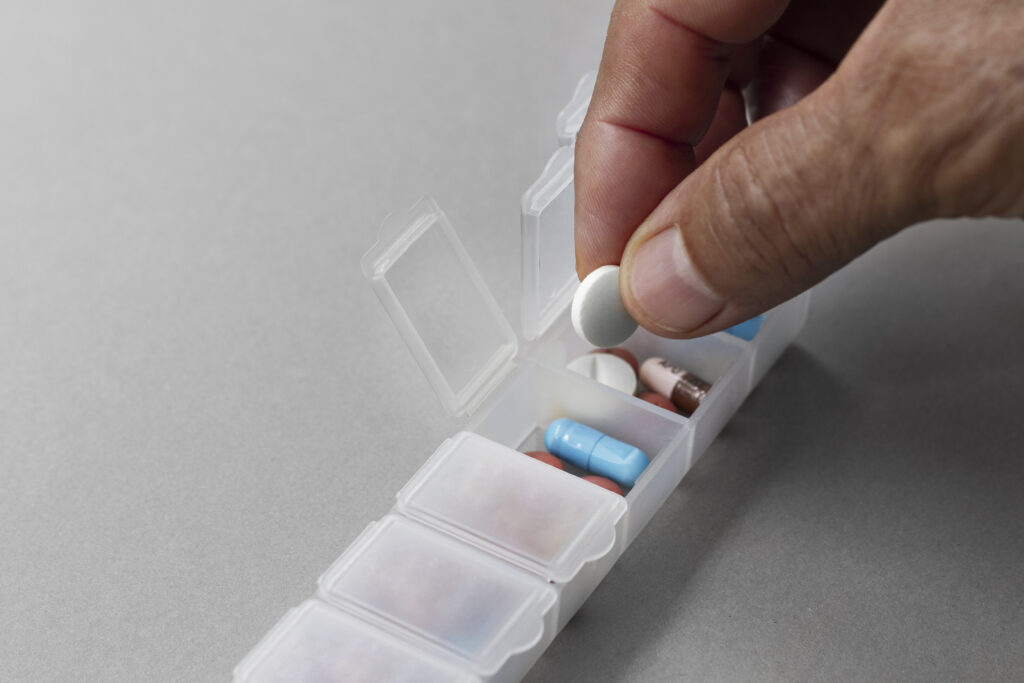
- Use a pill organizer if you take four or more medications. Opening one container each day is simpler than opening multiple bottles. It solves the “did I already take this today?” problem.
- Talk to your care team. If side effects or costs are getting in the way, your provider may be able to help or connect you to programs that can.
- Ask about simpler options. There may be a once-a-day pill or a combination pill that is easier to manage. Just ask.
- Lean on people you trust. A family member or caregiver can be a great support and help you stay on track.
Have questions about a medication? Ask, don’t Google.
Medications can be confusing. There is no such thing as a dumb question when it comes to your prescriptions. If you are unsure what a medication is for, worried about side effects, or have any concerns at all, you have real people who can help.
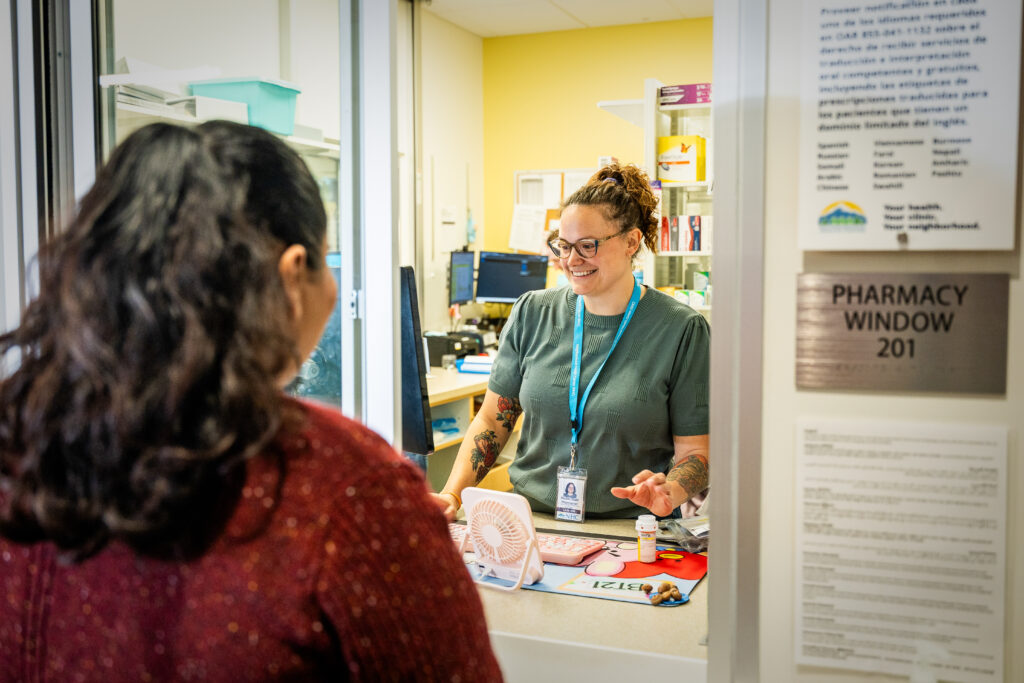
Your local pharmacist is a great first stop. They can tell you what a medication is for, what side effects to expect, whether it interacts with your other medications, and much more. If your pharmacist cannot fully address your concerns, call NHC or send a MyChart message and ask to speak with a nurse. The nurse can answer many questions. If they're not sure, they can connect you directly with your provider.
Skip the search engine. Google and AI tools don't know you, your health history, or your other medications. Your pharmacy and medical team do. They are always the better source for medication questions.
How NHC can help
At NHC, your care team includes clinical pharmacists, who are here to help your medications work for you.
Clinical pharmacists work directly with you and your care team to make sure your medications are safe, easy to manage, and right for your needs. They don't fill prescriptions at the counter, but they play a big role in your overall care.
Your NHC clinical pharmacist can help you by:
- Explaining why a medication was prescribed and how it fits into your care
- Going over how to take your medications and what to expect
- Helping with side effects that make it hard to keep taking a medication
- Reviewing all your medications to check for interactions or overlap
- Simplifying your medication schedule when possible
- Answering questions about insurance, prior authorization, or prescription delays
- Working with your pharmacy and providers to fix any issues before they become a problem
Comprehensive Medication Review (no referral needed)
If you take multiple medications and want to go through them one by one with a pharmacist, you can request a Comprehensive Medication Review at NHC. This is a 60-minute appointment with a clinical pharmacist where you can ask all your medication questions, talk through side effects, check for drug interactions, ask about costs, and more. You do not need a referral from your primary care provider. You can self-refer by calling your NHC clinic and asking to schedule this appointment.
Forgetting doses? Feeling overwhelmed by your medications? Unsure if a medication is helping you? Talk to your clinical pharmacist. They act as a bridge between your doctor and your pharmacy, so nothing falls through the cracks.
The takeaway
Taking your medication as prescribed is one of the most meaningful steps you can take for your long-term health. It's okay to ask for help making it work. Your care team is your partner in this. If something isn't working, speak up. There's almost always a solution.
Small, consistent actions add up. And when it comes to your health, showing up for yourself every day makes all the difference.
The information in this article is for educational purposes only and is not a substitute for medical advice, diagnosis, or treatment. Please talk with your care team about questions or concerns related to your health.
Sources
- World Health Organization. (2003). Adherence to long-term therapies: Evidence for action. World Health Organization. https://www.who.int/publications/i/item/9241545992
- Vrijens, B., Hensen, M., & De Geest, S. (2025). The silent epidemic of non-adherence – insights from the 2024 a:care congress. PMC / National Library of Medicine. https://pmc.ncbi.nlm.nih.gov/articles/PMC12096470/
- Centers for Disease Control and Prevention. (2017). CDC grand rounds: Improving medication adherence for chronic disease management — Innovations and opportunities. Morbidity and Mortality Weekly Report, 66(45), 1248–1251. https://www.cdc.gov/mmwr/volumes/66/wr/mm6645a2.htm
- Marcum, Z. A., & Gellad, W. F. (2018). Medication adherence: The elephant in the room. US Pharmacist, 43(1), 30–34. https://www.uspharmacist.com/article/medication-adherence-the-elephant-in-the-room
- Farmer, A., Bobrovitz, N., & Horne, R. (2025). Medication non-adherence: Definition, measurement, prevalence, and causes: Reflecting on the past 20 years and looking forwards. Frontiers in Pharmacology, 16. https://www.frontiersin.org/journals/pharmacology/articles/10.3389/fphar.2025.1465059/full
- Lam, W. Y., & Fresco, P. (2025). Enhancing therapy adherence: Impact on clinical outcomes, healthcare costs, and patient quality of life. PMC / National Library of Medicine. https://pmc.ncbi.nlm.nih.gov/articles/PMC11766829/

Rebekah Alder, Clinical Pharmacist
This blog was reviewed by Rebekah Alder, PharmD, BCACP, a Clinical Pharmacist at NHC Tanasbourne Medical Clinic. Rebekah earned her Doctor of Pharmacy from Southern Illinois University Edwardsville and completed her training as an Ambulatory Care and Academic Pharmacy Resident at Oregon State University and OHSU’s College of Pharmacy. At NHC, she works directly with patients and care teams to ensure medications are safe, effective, and manageable.